Welcome
My name is Whitney Patterson and I am passionate about helping people. I have done things like being a firefighter and first responder as well as volunteering as an advocate for survivors of sexual assault. I got into fitness, not for vanity or body image, but because I understand the powerful and positive effect movement has on our wellbeing, both physical and psychological. Humans are made to move and in today's sedentary society we often don't move as we should. I want to help you bring your body into balance, find your strength, and take control of your life.
I make people strong, physically, and mentally, and I coach them to do things they never thought possible.
Don't waste another minute! Contact me today.
Whit‘s Words of Wisdom
Do's and Don'ts of Gym Etiquette
As we all get back into the gym, I want to remind you of proper gym etiquette as well as some of the new rules we have implemented in order to keep everyone safe, happy, healthy, and in the gym.
- Spray/wipe down all equipment. At the top of the list is cleaning your equipment. Make sure you pick up a towel and spray bottle at the front desk when you check-in. Use it to spray and wipe all machines, benches, weights, handles, and anything else you use.
- Wear your mask. You don’t have to wear a mask while working out. However, that requires that you maintain a 6ft distance. So, if you’re working out with a friend, spotting someone, or otherwise can’t keep that much distance, please wear your mask. Also, remember to put it on when leaving the workout area and walking around the club.
- Rack your weights. Make sure to return any weights, mats, bands, etc. to their proper place.
- Don’t stand in front of the dumbbell rack. Grab what you need and step back out of the way to make it easy for everyone to get their weights and keep their distance.
- Respect other people's space and workout. Don't interrupt someone in the middle of their set. If you would like to work in on a machine or piece of equipment, now more than ever, it is important to make sure everyone is comfortable sharing. At the same time, don't hog equipment. Refrain from doing giant sets when it's crowded. Make sure you're cleaning between uses.
Thank you for respecting the rules so everyone can enjoy their workout.
If you have any questions, please don't hesitate to ask
Meal Prep Shouldn't Stop while you Work from Home
Are you working from home right now?
How has that changed your eating habits?
For me, it has meant a lot more time for grazing and more available snacks. One thing that hasn’t changed too much is my meal prep. You may ask, “why meal prep if you’re not going anywhere and have the time to cook all your meals fresh?”
That’s an excellent question.
1. I don’t particularly enjoy cooking and it’s preferable to me if I can bust it out in one shot.
2. I am the only real meat eater in my house so making 1 serving of chicken, beef, etc. doesn’t make sense.
And probably the one you should pay the most attention to:
3. When it’s time to eat, it’s time to eat. If I’m hungry I want to grab whatever is most convenient. Having ready-made servings of protein and healthy carb and fat options ready to go makes sticking to my macros a little bit easier.
McDonald’s doesn’t stop being a tempting and convenient option just because you’re at home instead of work. Whatever your temptation is, you can plan ahead to avoid it.
Most people are also not getting enough protein. There isn’t much to be had in the quick and convenient snack foods. If you are not actively working on getting quality protein at each meal you will fall short of your protein needs. Having readily available protein options makes getting it in a lot easier. Protein is also more satiating and will help with cravings and cutting down on junk calories.
So whether you are trying to lose weight, gain muscle, or maintain your current physique, prepping ahead of time will always help you reach your goals.
Failing to prepare is preparing to fail.
Getting Back to Gains
As we start to look forward to getting back in the gym we also have to think about the best way to do it so you don't get hurt or make yourself so sore that you can't come back again for a week.
Things to consider:
- How do you want to train when you get back to the gym?
- How have you been training from home?
- How different are they?
The less different the less you need to worry. For example, I have a barbell and enough weight at home so I have been doing compound lifts, but when I have access to machines and cable and can do more isolation work I am at risk for overloading those movements really quickly because I haven't done them.
The more differences there are in your current training and what you want to, the more you should think about and plan your re-entry accordingly. Have you been doing bodyweight and band exercises and you want to get back to bench and squat? The good news is that probably haven't lost too much muscle. However, strength is a function of more than muscle so you're likely to feel weak at first. You may also feel uncoordinated, but you are just out of practice and it will come back quickly. Think back to when you first started working out and do it better this time. Pay close attention to your form and range of motion. Go lighter than you think you need to and be patient. Don't push so hard that you make yourself so sore that you can't move for days and end up farther in the hole. You are primed for progress right now, so train smart.
Don't neglect your recovery strategies. You may expect to be sore, a lot of people will be, but with proper nutrition, you can give your muscles what they need and avoid a lot of unnecessary pain. Working out damages muscles and it will be more pronounced if you're jumping back into moves you haven't done in a couple of months. So make sure you give your muscles what they need; fast-digesting protein and fast-digesting carbs post-workout to kickstart the rebuilding. I did nothing but kettlebell swings and push-ups for a month before I got my hands on some weights and started doing significant volume. Without this stack I would have been a mess, not able to sit down or use the stairs, we've all been there. I've tried lots of different things post-workout, but this is the first thing that actually made me feel better. It's a game-changer, a life-changer, it's allowed me to get back to work without missing any days due to soreness. If you're serious about making gains, tired of being sore, or just want to give your body what it needs then you need to try it.
Stay Home Stay Safe
Stay Productive
I need a routine. If you're like me, Stay Home and Stay Safe has really thrown you out of your groove. Here are some things that I am doing to help me stay focused and productive.
- Move. Your workouts may look a little (or a lot!) different than what you did at the gym, but it's important to stay active. We are still sitting more than ever and activity is good for stress relief as well. Do what you can, even if you don't have any equipment you can still go for a walk and do lots of bodyweight exercises.
- Sleep. You may not have to wake up at a regular time, or as early as you were used to. Take this opportunity to get your 8 hours every night. Also, try to maintain a regular sleep schedule and bedtime routine. A productive day starts with a good night's sleep.
- Focus. There can be a lot of distractions when working from home. Pick one thing to devote your attention to at a time and set a time limit. Without fail something will try to divert your attention. Having a time limit helps to stay focused on the task at hand knowing you can move on to something else soon.
- Protein. Make sure you get enough protein every day. It's easy to snack on high carb and high-fat junk food. Getting enough protein will help keep you satiated and help you maintain muscle during this active period.
- Plan. What will your day look like? What time will you workout? Try to keep this consistent each day, since this is your new normal. Schedule your work and your family time to get the most out of each day.
You can struggle through this or you can choose to make the most of your time. Take a break, enjoy your family, stay home, and stay safe. Try these for yourself and let me know some of the things you are doing during your time at home.
Swing Smart
Golf Warm-up
Spring is here! That means we are getting outside and hitting the golf range. Even if you have been staying active in the offseason, it's important to make sure you warm-up those specific golf movements to stay injury-free and successful on the course. Here are some of my favorites you can do before you tee off.
1. A-Frame Stretch - Hinge from the hips and keep a nice flat back. Place hand or elbow on the inside of your knee. Reach the opposite hand up to the ceiling. Follow your hand with your eyes. Rotate and stretch your upper back. Repeat 5-10 times then switch sides.
2. Standing Figure 4 Stretch - You can use a club or bench for balance. Cross one ankle over the opposite knee. Sit your hips back and down into a squat, stretching the hips. Hold for 30-45 seconds and repeat on the other side.
3. Towel or Club Shoulder Stretch - Hold the towel or club behind your back. Pull up and hold. Repeat 3-5 times then switch arms.
For more tips to improve strength and mobility for your golf swing, contact me about Golf Conditioning sessions.
Fix Yo $h!t
Sore back? Stiff neck? Cranky shoulders?
Overactive traps are often to blame. This can happen from your daily activities like computer work, driving, the way you sit, etc. Working out can be the solution, but it can also exacerbate the problem if you're not actively trying to fix it.
If you are tired of the pain, here are three steps to fixing it:
1. Start your workout by doing some soft tissue work. You need to release those overactive traps or they will continue to take over your back and shoulder exercises. It's hard to foam roll your traps so try using a barbell set about shoulder hight to get some downward pressure.
2. Follow with some light stretching. 1-2 sets of 15-30 seconds each. Stay in the range where you feel the greatest stretch.
- Upper Trap Stretch
- Levator Scap Stretch
3. Strengthen and activate your mid-back. The goal with these is to pull your shoulder blades down and back using the muscles of your mid-back. You want to go lighter with higher reps to ensure you can properly engage the correct muscles. Strengthening the mid-back will help to balance the upper traps so they are not so overworked.
- Single Arm Lat Pulldown
- Single Arm Cable Row
Once you've done these you can go on with the rest of your warm-up, the rest of your workout, and the rest of your day. As long as you are cognizant of your posture and your shoulder position and protecting your neck space you will be well on your way to calming those cranky shoulders for good.
Key to #Gains
How do you know if you're getting enough protein?
- Step 1: Track everything! You can’t know how much protein you’re getting unless you weigh and measure your food. This can be hard to manage for some people, but it’s really the only way to know for sure. If you have a hard time with this there are some tricks we can use to help ease you into the process. For example; 4 oz of meat is about the size of a deck of cards.
- Step 2: At least 20 grams of high-quality protein every 3 hours. There is a lot to unpack with this one:
- High-quality means we are getting a complete amino acid profile. You can get this from animal proteins or by combining certain foods like brown rice and pea protein to form a complete protein, like in this vegan protein powder. 1st Phorm Vegan Power Pro
- Timing can vary from 2-4 hours, depending on your goals. 3 hours is a good time to shoot for to ensure you stay anabolic. Anabolic means you are burning fat and building muscle. No matter what your goals are, you want to be anabolic. The alternative is catabolic, which means burning muscle and storing fat.
- 20 oz is an average and can change depending on your body weight. You may adjust it once you get to Step 3, but it’s a good place to start.
- Step 3: Find your protein number. This is the amount of protein you need per day to support your lean body mass. A good place to start, then, is to use your lean body mass as your protein goal. You can estimate your lean body mass by using some circumference measurements or get a STYKU Body Comp test to be more specific. Once you have your number you can divide by your number of meals per day to spread your protein out and make sure you're getting enough to stay anabolic and reach your goals.
No Weak Sides
Fix Muscular Imbalances
Imbalances are a normal part of training. We all have a dominant side and it's natural for that side to be stronger. Unfortunately, this can lead to asymmetries at best and injuries at worst. So what can you do about it?
Working your limbs separately is the first step. Cables, kettlebells, dumbbells, and even machines can all be utilized one side at a time. Here are a few exercises to try:
1. Single Arm Cable Rows
2. Single Arm Dumbbell Bench Press
3. Single Leg Squat to Box
Work your weaker side first so you're fresh and can devote all your energy and attention to it. Don't let your dominant side get stagnant though. Break up your sets on your weaker side so that you can do the same amount of volume. For example, if you can do 3 sets of 10 single leg squats on your strong leg, you can try 6 sets of 5 on your weaker side. This allows for more recovery without doing less total work. You can train both sides without sacrificing form or progress. You may never be completely even, but you don't need to have a weak side. Now you can have a strong side and a stronger side!
Truth about Fruit
Myth: Fruit is bad for you because it has sugar.
Myth: Drinking your fruit is better for you.
Myth: You shouldn't eat fruit when you're trying to lose weight.
When it comes to weight loss, calories are king. So making sure you are eating in a caloric deficit and tracking your overall sugar and carbohydrates, is going to be more important for your weight loss success than just avoiding certain foods. A cup of mashed banana and cup of doughnuts have roughly the same amount of sugar, does that mean you would be better off eating the doughnut? Of course not. Fruit has lots of nutritional advantages over other sugar-containing foods. However, if you are watching your sugar intake, here are some tips for making fruits a healthy part of your diet.
1. Pay attention to the sugar content
Not all fruit has the same amount of sugar. Stick with berries what not only have lower sugar but also contain some rarer carotenoids like cyanidin 3-glucoside which increases insulin sensitivity.
2. Eat whole fruits, not dried fruits
Dried fruits don't contain any of the water that helps fill you up. As a result, you could eat a lot more dried fruit and easily shoot past your carb and sugar goals.
3. Don't juice your fruit
Blending reduces the satiety factor, again allowing you to consume a lot more sugar than you would be able to eat if you had to chew it. Pulverizing the fiber also makes it much easier to digest, which means that sugar hits your bloodstream a lot quicker, resulting in spiked insulin levels, followed by a sugar crash.
4. Limit your fruit serving to 2 or 3 a day, preferably berries
This goes back to limiting sugar and calories for the day. Tracking servings can be more preferable than counting calories for some people. If berries aren't an option, try getting more vegetable instead.
Train with Knee Pain
Do you suffer from knee pain? Want to build your legs without wrecking your knees? Here are 3 exercises that can be hard on your knees and some alternatives.
Forward Lunge
When your strength and form are lacking this can lead to your torso collapsing and your knee falling forward and/or inside of your foot, putting more stress on the joint.
Split Squats take movement and momentum out of the equation so you can focus on staying upright with your weight evenly on both feet.
Reverse lunges add the movement back in, but they're easier form-wise because you're less likely to drive your knee too far forward.
Leg Extension
If you have mastered the split squat and reverse lunge, try the Rear Foot Elevated Split Squat for a great quad burn.
Blood Flow Restriction Training, a more advanced training technique, allows you to get the same benefits of the leg extension with a much lighter load, putting less shear force through your knees.
Running
Some people are born runners with a natural stride. The rest of us plod along pounding our knees with less than efficient mechanics.
Our bodies don't know what kind of cardio you're doing, so if you're running for the heart and health benefits or trying to lose weight, consider something easier on your joints. Incline treadmill walks can give you the same cardio benefits and calorie burn as long as you work hard enough to keep your heart rate up.
If you insist on running, mix it up with intervals, sprints, and Fartlek-style training. From an orthopedic standpoint the more varied your stride, gait, and intensity the better.
Filling the Gaps
Unless you have been living under a rock for some time you have probably seen ads for pills or supplements claiming to help you lose weight, improve your health or fitness, or any number of amazing applications. If you have weight or fitness related goals, then, of course, you want to get the best results as fast as possible. We are very impatient as a society, but remember, fast results don't last, and lasting change takes time. But that doesn't mean you can't set yourself up for the best results, just be wary, if it seems too good to be true it probably is.
So what supplements should you take?
The first thing you need is to make sure your diet is solid. Eat lots of fruits and vegetable, as many different kinds as you can. The best superfoods powder isn't going to outdo the nutritional value of the real thing. The same is true for fish oil and magnesium. You should think of supplements as just that. Supplements should complement an already healthy and nutritionally dense eating plan, they're just there to help fill the gaps. You can only eat so much fruit and fish in one day, so supplements allow you to get more of the good stuff without overeating. Consider your own needs and what you are deficient in, but these are my top 5 must-haves in my cupboard, including links to the ones I use.
- Protein Powder is a great way to make getting protein easy, convenient, and delicious as carbs and fats. I limit it to one shake a day to make sure the bulk of my protein comes from real food.
- The health benefits of Omega 3s in Fish Oil are too numerable to go into here. It's also impossible to eat the amount of oily fish it would take to see those benefits, even if you like tuna, herring, and sardines. Full Mega
- Just about everyone is deficient in Vitamin D3, especially here in the north. There are a ton of health benefits but being deficient can also make you weaker in the gym. We probably need more than what most of the guidelines recommend. I take between 1000 and 5000 IU a day, more in winter and less in summer. Vitamin D3
- Even if you're not like me and you're good about eating your fruits and veggies, it's hard to get the variety of nutrients every day. Superfood powder can help fill those gaps. Opti-greens 50
- Magnesium is a master mineral that plays a role in many vital functions. Heavily-farmed soils are stripping out a lot of the magnesium, in food and sweating at the gym can help deplete your supply even further. Taking a ZMA supplement before bed can also help improve your sleep. Night-T
Don't Quit When Motivation Fades
It’s resolution season and if you’re like most people you probably have some kind of fitness, weight loss, or health resolution this year. It’s hard to start new, healthy habits and not everyone just loves going to the gym as I do, but that’s OK. Here are three tips for when you feel like quitting.
1. Keep Training
Losing motivation is normal and a lot of people take a break when it happens, but that leads to motivation dropping even more. You can change the type, intensity, volume, whatever, but keep going to the gym!
2. Something is better than nothing
Thinking you need to work out 60 to 90 minutes is one reason people quit training. We all have other responsibilities fighting for our time and energy. Hitting the gym hard for 20 minutes is 1 million times better than not doing anything.
3. Prioritize Training
This is a tough one. All those other responsibilities again, but here’s the deal; when it’s a priority it doesn’t matter what else is going on, how you feel, or your motivation level. You’ll find a way to get it done.
Season of Success
If you feel like your routine went out the window with the summer, you're not alone. We crave routine, so while summer is full of vacations and outdoor play, the hectic unpredictability can be hard physically and mentally. We look forward to the kids going back to school so we can get back in a regular schedule. While we want to get back to that routine, it's not always easy. Here are three tips to be successful this Fall.
1. Start Small
If your goal is to workout every day but you haven't been consistent since May, it might be a good idea to start with 3 days a week and ease back in so you don't get too sore or hurt and ruin all your good intentions.
2. Get Some Accountability
Have someone in your life who will help you stick to your plan. It's easy to talk yourself out of going to the gym. A workout partner, personal trainer, or classmate who is expecting you to be there is often harder to disappoint.
3. Forget About Motivation
People who wait until they feel like doing something never get anything done. Set goals, make a plan, and stick to it.
Let me know if you need help with your plan. Let's make this your most successful season!
Healthy Irregularity
If you have been reading my posts for a while you know that recovery is super important to me. If you're not recovering well, you won't see the results of all your hard work in the gym. Heart Rate Variability (HRV) is another method for you to see how well you are recovered. It can tell you if you should take it easy in the gym or go all out. There are other things that can help tell us this, including resting our heart rate, so why measure HRV? Healthy irregularities. Even when we have a regular resting heart rate, not all beats are exactly the same. For example; if you feel your pulse right now you can notice longer times between beats when you exhale and shorter when you inhale. Heart rate variability monitors use different measurements and formulas, but they're looking for the irregularities that are part of a healthy and well-recovered person.
The autonomic nervous system regulated important systems in our body, including heart and respiration rate and digestion. There are 2 branches within the autonomic system; a parasympathetic (rest) and a sympathetic (activation) branch. Parasympathetic regulation lowers your heart rate, giving more room for variability. Sympathetic regulation elevates your heart rate and there is less room for variability. When the rest-related parasympathetic branch is active training can lead to the withdrawal of parasympathetic activity, or activation of the sympathetic branch even when you are resting, both leading to elevated heart rate and lowered HRV.
High HRV is typically an indication of especially cardiovascular, but also overall health as well as general fitness. Generally speaking, it tells us how recovered and ready we are for the day. HRV can also react to changes in our body earlier than heart rate, which makes it a sensitive measure for insights into our wellbeing.
If you like more data and choose to measure your HRV remember it's just another tool, pay attention to yourself and how you feel, and while it's a good indicator don't rely on it too much. You shouldn't compare your HRV with that of other people, concentrate on your own HRV and its trends. HRV is not intended to diagnose any health issues. Talk to your doctor before making any major changes to your training or nutrition.
Keep It Simple Stupid
Humans have a tendency to over complicate things. When something seems complicated the sheer act of doing anything makes us feel accomplished. When it comes to working out everyone wants the magic formula; the perfect number of reps and sets, and even the right treadmill incline that will yield the best results. All these variables are wonderful and definitely have their place, and the more advanced you are the more you can tweak them. However, it doesn't matter what your program is if you're just going through the motions. Hard work is where it's at. Hard work is what's going to get you the results you're looking for. If you're not happy with your progress, don't go looking for the perfect program or diet until you have looked inside yourself to make sure you're giving it all you've got. Using a heart rate monitor like Myzone can help you see if you are working as hard as you think you are. Progress demands your best effort. Work hard in the gym, then recover hard with food and sleep. Don't make things complicated just for the fun of it.
What are you listening to?
Listening to music during your workout can be very useful. This is something that most of us know intuitively. I get comments all the time about the music in the gym. What makes it ”good” or ”bad” music for working out? Much of that is going to be subjective. We all have different opinions and musical tastes.
Recent studies have proved what we all know to be true, music does play a roll in performance. But they also show that what you listen to and when can make a difference. There are different phases of a workout so don't limit yourself to just one type of music. Something mellow that makes you feel good can be great for your warm-up and even before you get to the gym because it puts you in a good mood and increases norepinephrine which causes enhanced arousal, attention, and focus. Something too loud or intense during this time can cause overstimulation and shoot your nervous system to hell. Note the classic inverted-U arousal curve. Think of soft music at one end and heavy metal at the other.
Save the harder, louder, more aggressive music for later in your workout as it can help pump you up when you get tired and helps you disassociate from your fatigue. This is also why you can feel free to crank it up during cardio.
In short, don't blast anything aggressive while you are introducing a new move or tapering down because it can compromise your performance. Listen to your body and play music you like, that makes you feel good and helps you perform at your best.
Embrace Cold
Now that we’re into the snowy, winter season and conversations inevitably turn to the weather, I want to tell you about the benefits of cold water therapy. Ice baths have been used throughout history and modern science backs up a lot of health claims. You can get many of the same benefits from a cold shower. Here are some reasons to embrace the cold this year.
- Improved Circulation
- Relieves Depression
- Keeps Skin and Hair Healthy
- Strengthens Immunity
- Increases Testosterone in Men
- Increases Fertility
- Increases Energy and Well-Being
Check with your doctor if you have the following conditions. Some people should not try cold showers due to the shock to the body: Heart disease, high blood pressure, overheated or feverish. If you are ready to get started, contact me for more information and take the 20-Day Cold Shower Challenge.
The Habit Loop
Habits are an incredibly powerful force in our lives. Most of our actions throughout the day are not conscious decisions but habits based on environmental triggers. You brush your teeth, get coffee, drive to work the same way every day because you have made it part of your routine. But what happens when those habits start hindering your progress? It's important to evaluate your routine to make sure your habits are making you better, or at the very least, not destroying the hard work you put in at the gym. If you have a habit that needs changing, you need to first understand the habit loop; a circular process with three main components.
- The Cue: A situational trigger that is based on a reward you're seeking.
- The Routine: A physical or emotional action you take to obtain the reward.
- The Reward: The satisfaction you seek by following the routine.
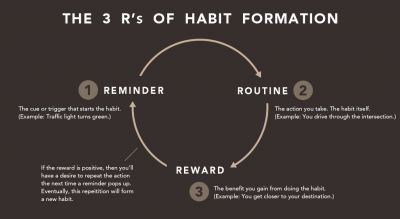
The key to a permanent change is to break down the habit loop into three distinct components. When you know why you take a certain action, it becomes easier to substitute this behavior with a positive change.
To change a habit, you must keep the old cue, and deliver the old reward, but insert a new routine. A good way to remember this is with the 3 Rs of habit formation.
4 Reasons to Keep a Gratitude Journal
- Gratitude orients us to the positive: With all the stressors we have in our lives it's easy for us to get stuck in a negative space. Work, money, and responsibilities can weigh you down but having gratitude orients us toward noticing the positive aspects of our lives. This is especially helpful when dealing with any kind of loss or setback.
- Gratitude alters our priorities: Instead of focusing on those negative aspects or what we've lost, gratitude allows us to focus on the positive. We can shift our priorities to focus on what we have and how fortunate we are.
- Gratitude improves sleep: Positive thoughts prior to falling asleep are related to improved quantity and quality of sleep. This is why writing in a gratitude journal right before you go to bed is the best time to take advantage of all the positive benefits of having gratitude.
- Gratitude makes us happier and healthier. Positive traits gratitude has been linked to:
- willingness to forgive
- low narcissism
- strengthens relationships
- promotes relationship formation and maintenance
- positive relationship connection and satisfaction
- promotes conflict resolution
- increases reciprocally helpful behavior
- lower risk of depression, anxiety, phobias
- lower risk of nicotine and drug dependence
- lower risk of eating disorders
- improve body image
- higher self-esteem
9 Ways to Eat Healthier Without Thinking About It
Design your environment for success
- Use smaller plates: That way if you want more food you have to get up to get it.
- Make water more readily available: Most of us mindlessly sip on beverages while doing other tasks throughout the day. By keeping water close by you ensure that it is water you're drinking instead of coffee or soda.
- Want to drink less alcohol or soda? Use tall, slender glasses instead of short, fat ones. Taller drinks look bigger to our eyes than round, horizontal mugs and because height makes things look bigger, you'll actually drink less from a taller glass.
- Use plates that have a higher contrast color with your food: When your plate matches the color of your food you are more likely to serve yourself more because your brain has difficulty distinguishing the portion size from the plate. This makes dark greens and blues great plate colors because you're likely to eat more leafy greens and vegetables and fewer starches like pasta, potatoes, and rice.
- Display healthy foods in a prominent place: When you're hungry and in a rush, you'll grab the first thing you see so make it something healthy.
- Wrap unhealthy foods in tin foil: Keep them "out of sight, out of mind."
- Keep healthy foods in larger packages and containers, and unhealthy foods in smaller ones: Big boxes and containers tend to catch your eye more, take up more space in your pantry and generally get in your way, making them more likely to get noticed and consumed. You can always repackage your unhealthy food into smaller portions.
- Serve meals by using the "half plate" rule: When you serve yourself, start by making half your plate fruits or vegetables, then fill the rest based on that constraint.
- Use the "outer ring" strategy to buy healthier foods: The outer ring of the grocery store is where healthy food lives; think fruits, vegetables, meat, fish and eggs. If you stay in the outer ring and don't peruse the aisles you are more likely to buy healthier food, which means you're more likely to eat healthier food when you get home.
The common theme between these strategies is that each one puts more steps between you and bad behavior and fewer steps between you and good behaviors. You can take this approach to almost anything in life. Hack your life by making good behaviors easier and bad behaviors more difficult.